


January 28, 2025: Richard Nelson died
We are sad to announce that Richard R. Nelson, our founding board member, has passed away. Here is an obituary that the International Schumpeter Society sent out.

© Copyright 1999-2026
See Copyright Notice

We are sad to announce that Richard R. Nelson, our founding board member, has passed away. Here is an obituary that the International Schumpeter Society sent out.
This is a wonderful introduction by Robert Nesse to the field of evolutionary psychiatry, which we have not covered to date on our site. We will post soon the talk by Professor Nesse given to the Darwin Club on 8. April 2024.
Evolutionary psychiatry: foundations, progress and challenges
Michael Ruse in a talk to the Darwin club provides a wonderful overview of the history of biological thought that will be interesting even to scholars who are focused on the social sciences. Who would have thought that the ideas of “Lamarkian” vs. “Darwian” evolution have had such a extended history long before the “New Biology” came on the scene.
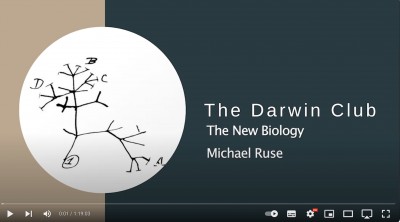
Click on the Image to start the video of his talk.
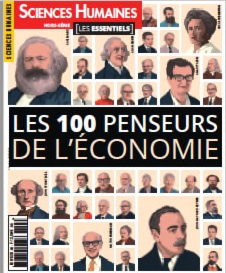

Richard Nelson and Sidney Winter have been listed by the French Magazine Sciences Humaines among to top 100 economists of all time. You can read here (in French) how the magazine portrays Nelson and Winter’s intellectual contributions. Nelson and Winter’s Ideas
Ian Lustick’s Taking Evolution Seriously: Historical Institutionalism and Evolutionary Theory is an interesting article arguing that political science would benefit from using evolutionary theory more. He gives concrete examples where explanations would have become more compelling.
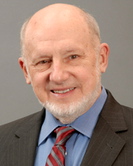
Sid Winter gave a lecture on what we can broadly construe the evolution of knowledge. The specific topic is the provocative question “Can research save us. Read or download Winter’s Lecture here.
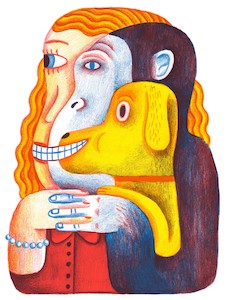
Frans de Waal summarizes research on emotions in animals and human: “Uniquely human emotions don’t exist. More and more, I believe that we share all emotions with other species in the same way that we share virtually every organ in our bodies with them. No exceptions.” Read his full article in NY Times.com.
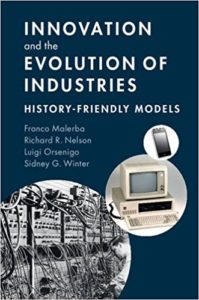
Sid Winter talks with Knowledge@Wharton about his new book on “history friendly evolutionary models”, which he co-authored with Franco Malerba, Richard Nelson, and Luigo Orsenigo. The book deals with the interactions between innovation and industry evolution. Winter gives a quick introduction to evolutionary economics and the scientific value of history-friendly simulations models. Read the transcript or listen to podcast here.
Sid Winter won the 2015 Global Award for Entrepreneurship Research for “his deep empirical understanding of Schumpeterian processes of dynamic competition, generation of differential technological opportunities through appropriability conditions and the mechanisms driving dynamic capabilities in firms.” Full story. Download Winter’s Prize Lecture here.
Until today you night have though that mineralogy is the exact opposite of an evolutionary science. Minerals should have the same property everywhere in the universe. In this short 7-min video, Robert Hazen explains why an important branch in the science mineralogy has to be evolutionary: the appearance of particular minerals has a history. They do not exist at all places in the universe and then do not exist in all times. Why and when minerals appear is the evolutionary branch of the science of mineralogy. Watch Video. Here is a short piece that Hazen was written on mineral evolution. Hazen has also published an article with Niles Eldrege in which articulate their view of a general theory of evolution that is much broader than the one in biology. Read Themes and Variations in Complex Sytems.

Robert Atkinson will present the findings from a new report that contrasts an evolutionary economic view with conventional economics, analyzes the three main sources of U.S. economic evolutionary change, and presents eight key principles for an evolutionary economics-inspired economic policy. Commentator are Richard R. Nelson, Eric Beinhocker, and Michael Lind. Details on how to see the live webcast are provided here.
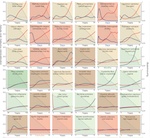
Social scientists often look with envy to the natural sciences believing that natural scientists do not face the diversity of patterns in social phenomena. On this background, the recent finding of the wide diversity of aging across species is noteworthy. Read the article in Nature.
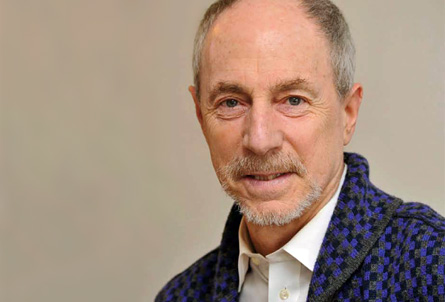
We are all very sad that Steve passed away (See CMU obituary). Seven Klepper supported one of the senior scholars supporting the creation of etss.net from the very beginning. On March 23, there was at event as part of the 20th anniversary of the CCC to honor Steve. He was able to attend the day and you can watch the tributes that were made about it exemplary contributions. Honoring Steve Klepper Video.
E.O. Wilson explains why multi-level models of evolution that allow for group selection have of become more accepted in recent times. He writes: “Multilevel selection is gaining in favor among evolutionary biologists because of a recent mathematical proof that kin selection can arise only under special conditions that demonstrably do not exist, and the better fit of multilevel selection to all of the two dozen known animal cases of eusocial evolution.” Read the full article “The Riddle of the Human Species on NYTimes.com.

Editor’s note: These remarks by Sidney G. Winter were delivered at a memorial service held at 10:30 a.m., Saturday, February 9 in the Rogel Ballroom of the Michigan Union building at the University of Michigan. You participate in remembering Michael Cohen on a Facebook Page for him.
Sidney Winter: It is common knowledge here that Michael Cohen was a very special human being. Not only is that well understood in general terms, but there is a list of his specific virtues that is also widely acknowledged. As we have all struggled to cope with this loss, in this past week, I have been struck by the power of this consensus about him, how effectively people can evoke the person they knew, and how clear it is that it was indeed the same remarkable person that they all knew. Even the appraisal of him as the embodiment of typical Midwestern virtues, his California background notwithstanding, came to me from more than one source.
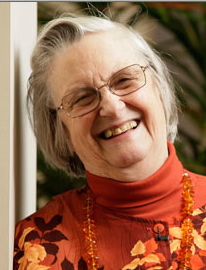
Geoffrey Hodgson writes about the importance of her work.
Her Nobel Prize Lecture provides a good overview of her life work. Read Noble Lecture.

Christopher Kelty organized a workshop on the MODE AND TEMPO IN TECHNOLOGICAL CHANGE at ULCA Institute for Society and Genetics. Mike Alfaro spoke about the topic from the perspective Phylogenetics, Robert Boyd from the perspective of Cultural Evolution, and Johann Peter Murmann from the perspective of Economic and Organizational Change. James Griesemer was the discussant. The video of the workshop is available on the web: Video
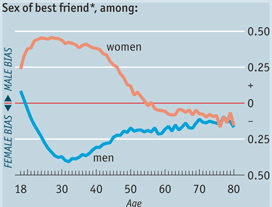
The Economist reports ingenious new research by Roger Dunbar to test the grandmother hypothesis, namely that women after their menopause, will invest a lot more time and energy to ensuring that their daughters have offspring. He analyzed 2 billion phone calls to find out who people speak to the most to get a proxy for people’s investments the one person who is most important to them. Read the full story.
Johann Peter Murmann has published an inductive case study entitled Coevolution of Industries and Important Features of Their Environments. Using a comparative historical method and drawing on evidence from five countries over a 60-year period, this paper spells out how coevolutionary processes work in shaping the evolution of industries and important features of their environments.Read the abstract and download paper here.

David Sloan Wilson argues that to gain real knowledge of humanity, every field needs to drink from the “cup” of evolutionary theory. But he argues that behavioral economics as practiced today pays too little attention to evolutionary theory. Read the full article, Take the Evolution Challenge here.

Berkeley geology Professor Walter Alavrez and one of his former students, Roland Saekow, have created a cool software to visualize all of history—yes you have heard it right. It takes you from the big bang to history on the human scale. Check out Chronozoom.

Edge.org just held a noteworthy conference on the THE NEW SCIENCE OF MORALITY. In his NY column The Moral Naturalists David Brooks wets your appetitive to watch the contributions of leading scholars in the new field of evolutionary morality. All speaker videos will be posted this weekend.
 Tell a Friend